The Benefits of Automated Stator and Rotor Production for Modern Factories
Modern factories are under constant pressure to increase production efficiency while maintaining high standards of quality and reliability. This is especially true in the electric motor industry, where demand continues to grow across electric vehicles, industrial machinery, robotics, appliances, renewable energy systems, and automated equipment.
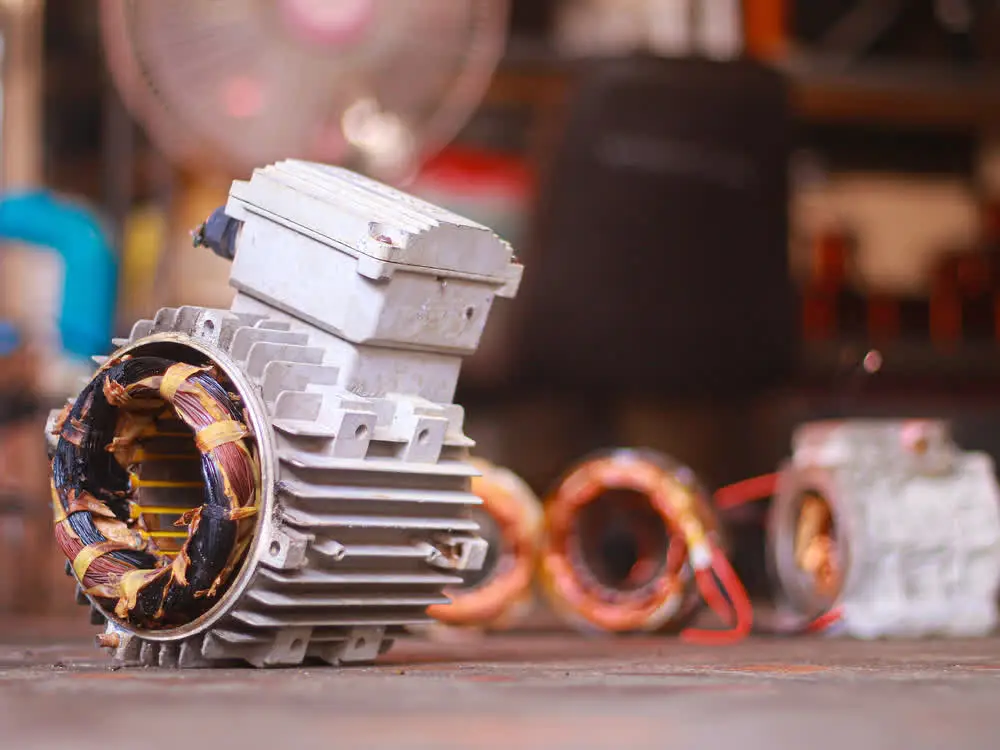
Stators and rotors are fundamental components of many electric motors, and their manufacturing processes require accuracy at every stage. Automated production technologies are helping manufacturers improve these processes by reducing repetitive manual work, increasing consistency, and connecting different stages of manufacturing into more efficient workflows.
Why Stator and Rotor Production Requires Precision
An electric motor depends on the interaction between its stator and rotor to generate mechanical movement. Because these components must work together accurately, inconsistencies during manufacturing can affect the performance, efficiency, and reliability of the finished motor.
Traditional production methods may rely on manual operations for winding, assembly, positioning, and inspection. While skilled workers remain valuable, manual processes can become difficult to manage when production volumes increase.
Automation allows manufacturers to perform repetitive operations according to predefined parameters. This creates a more controlled manufacturing environment and helps reduce variations between production cycles.
How Automation Improves Factory Efficiency
Automated production systems can connect several manufacturing stages into a coordinated workflow. Instead of treating winding, assembly, inspection, and testing as completely separate activities, manufacturers can integrate these processes into a larger production system.
Some key benefits include:
- Higher production consistency
- Faster manufacturing cycles
- Reduced manual handling
- Lower risk of repetitive errors
- Better production monitoring
- Improved use of labor and materials
- Easier quality control
These improvements can help factories increase output without relying solely on additional manual labor.
The Growing Importance of Specialized Motor Winding
Winding is a critical part of motor production because the arrangement of conductive wire can influence electrical performance. Different motor designs require different winding methods, which means manufacturers need equipment suited to their specific applications.
For example, axial flux motor winding involves specialized requirements because axial flux motors have a different structural configuration from many conventional radial flux motors.
As interest in compact and efficient motor designs grows, manufacturers may increasingly require specialized winding technologies capable of supporting these emerging architectures.
Automation can provide the precision necessary for maintaining consistent winding patterns across larger production volumes.
Building More Efficient Motor Production Lines
Modern motor manufacturing is increasingly moving toward integrated production lines. Instead of relying on isolated machines, factories can connect multiple pieces of equipment so that components move smoothly from one process to another.
A well-designed production line may include equipment for component preparation, winding, assembly, balancing, testing, and inspection.
This type of integration can reduce unnecessary material movement and minimize delays between production stages.
For manufacturers, the goal is not simply to automate individual tasks but to create a complete workflow where each stage supports the next.
The Role of a Motor Winding Machine Factory
The development of automated motor production depends heavily on specialized manufacturing equipment. A motor winding machine factory can focus on designing and producing machinery capable of handling the specific requirements of different motor applications.
Specialized equipment manufacturers can develop systems for different winding methods, motor sizes, production volumes, and automation levels.
This gives motor manufacturers greater flexibility when selecting equipment for their production facilities. Instead of relying on generic machinery, they can look for solutions designed around their particular manufacturing requirements.
Improving Production Consistency
Consistency becomes increasingly important as production volumes increase. If thousands of motors are manufactured using slightly different manual processes, even small variations can eventually create noticeable differences in product quality.
Automated equipment helps reduce this variation by repeating programmed operations according to established parameters.
For winding processes, machines can control factors such as speed, wire positioning, tension, and winding patterns. Automated assembly systems can similarly control component placement and other repetitive operations.
This consistency can make quality management easier and improve the predictability of production output.
Reducing Material Waste
Material efficiency is another important consideration for modern factories. Copper wire, metal components, insulation materials, and other motor components represent significant manufacturing costs.
Production errors can result in wasted materials and additional rework. Automated systems can reduce the likelihood of such errors by controlling production conditions more precisely.
Improved material utilization can lower unnecessary expenses while also contributing to more sustainable manufacturing practices.
Factories can therefore benefit from automation not only through increased productivity but also through more efficient resource management.
Better Quality Control and Testing
Automated production can make quality control easier to integrate into manufacturing workflows. Testing and inspection equipment can be positioned at different stages of the production process.
For example, manufacturers may perform inspections after winding, assembly, or final motor production. Automated testing can help identify electrical or mechanical issues before products are shipped.
Early detection is particularly valuable in high-volume manufacturing because it prevents the same production problem from affecting a large number of units.
When quality data is collected throughout the production process, manufacturers can also use it to identify recurring issues and improve their operations.
Supporting New Motor Technologies
The motor industry is continuously developing. Electric vehicles, robotics, industrial automation, renewable energy, and other technologies are creating demand for new motor designs with different performance characteristics.
Manufacturing equipment must evolve alongside these developments.
Specialized automation can help factories adapt to new motor winding machine factory architectures and production requirements. Advanced winding technologies, programmable controls, and flexible production equipment allow manufacturers to adjust processes as product designs change.
This adaptability can be particularly valuable for companies operating in rapidly evolving markets.
Smart Manufacturing and Connected Equipment
Modern automation increasingly includes digital monitoring and data collection. Sensors can provide information about machine performance, production cycles, operating conditions, and maintenance requirements.
When this information is connected to factory management systems, manufacturers gain greater visibility into their operations.
Production data can help identify bottlenecks, monitor equipment utilization, and plan preventive maintenance. This can reduce unexpected downtime and support more predictable production schedules.
Over time, connected automation can become an important part of a smart factory strategy.
Conclusion
Automated stator and rotor production offers modern factories an opportunity to improve efficiency, consistency, quality, and scalability. By automating winding, assembly, inspection, and testing processes, manufacturers can create more streamlined production environments while reducing repetitive manual work.
Specialized technologies such as axial flux motor winding are also becoming increasingly relevant as new motor designs enter the market. At the same time, specialized equipment providers and a capable motor winding machine factory can help manufacturers access machinery suited to different production requirements.
As demand for advanced electric motors continues to grow, factories that invest in precise, flexible, and connected automation will be better prepared to respond to changing market needs while maintaining reliable production standards.