Custom Software Boxes: Modern Packaging Solutions for Tech Brands
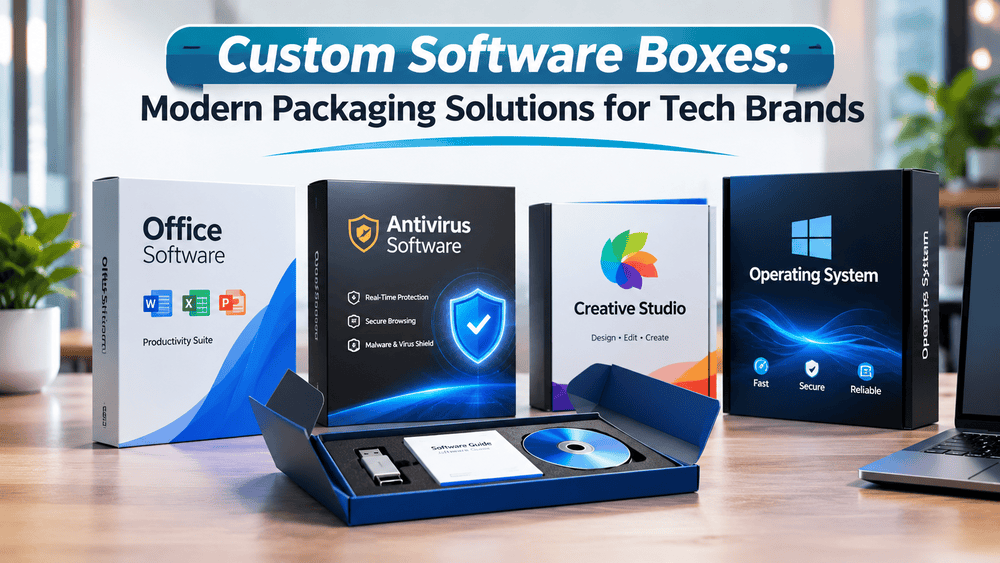
Technology has changed how businesses develop, distribute, and present software products. Although digital downloads have become common, physical packaging remains useful for software licenses, USB drives, installation guides, and promotional kits. Today, custom software boxes help technology companies present these products professionally while keeping physical components organized and protected. A well-designed package also communicates product features, installation requirements, and brand identity. By selecting suitable materials, printing methods, and functional designs, technology businesses can create packaging that meets modern distribution requirements and delivers a convenient customer experience.
What Are Custom Software Boxes?
Custom Software Boxes are specially designed packaging containers used to store and present physical components associated with software products. Unlike standard cartons, these boxes are manufactured according to specific product dimensions, branding requirements, and distribution needs.
Software companies use them for operating systems, gaming products, antivirus programs, business applications, educational software, and digital activation kits. Depending on the product, the packaging may contain installation media, subscription cards, printed manuals, or other accessories.
These boxes connect digital products with a physical retail experience, making them useful for businesses that sell through stores, online platforms, and corporate distribution channels.
Why Physical Software Packaging Still Matters
The growth of cloud computing and online software distribution has reduced the need for traditional installation discs. However, physical packaging continues to serve several purposes within the technology industry.
Software publishers may distribute prepaid subscription cards through retailers, while businesses may provide employee onboarding kits containing access instructions and security devices. Gaming companies also use physical packaging for limited-edition releases and collectible products.
Physical presentation gives customers something tangible when purchasing digital services. It can be particularly useful for promotional campaigns, corporate gifts, technology exhibitions, and retail environments where customers compare products before making purchasing decisions.
Materials Used in Custom Software Packaging Boxes
Selecting packaging materials requires an understanding of product weight, handling conditions, and transportation requirements. Different materials provide different levels of structural support and printing flexibility.
| Packaging Material | Key Characteristics | Suitable Applications |
| Paperboard | Lightweight and easy to print | License cards and installation guides |
| Kraft board | Natural appearance and practical construction | Subscription and promotional kits |
| Corrugated cardboard | Additional structural support | E-commerce and shipping packages |
| Rigid board | Firm structure and refined presentation | Collector’s editions and corporate kits |
Paperboard thickness is commonly measured in points, with one point representing 0.001 inches. Depending on the construction and product weight, suppliers may offer 18-point or 24-point paperboard for folding software cartons.
Popular Software Box Styles for Technology Products
Packaging structure determines how customers access software products and how efficiently businesses assemble and store finished cartons. Software Boxes are available in several configurations to accommodate different requirements.
Popular packaging styles include:
- Tuck-end boxes for lightweight installation kits
- Sleeve boxes for software activation cards
- Two-piece rigid boxes for special-edition products
- Mailer boxes for direct-to-customer deliveries
- Drawer-style boxes for technology gift sets
- Hang-tab cartons for retail display environments
Each structure offers different advantages. Businesses should evaluate assembly time, shelf space, opening convenience, and product compatibility before finalizing a design.
Protecting Software Components During Transportation
Physical software components can become damaged when exposed to excessive pressure, movement, or unsuitable storage conditions. Scratched installation discs, bent activation cards, and damaged USB connectors can affect product usability.
Custom Software Packaging can incorporate internal trays, dividers, and fitted compartments that keep individual components in their intended positions. These features are particularly useful when a package contains multiple accessories.
Manufacturers should also measure internal box dimensions accurately. Excessive empty space allows unnecessary movement, while insufficient space may place pressure on delicate contents. Products shipped individually may require an additional protective shipping carton.
We Print Boxes: Customized Packaging for Modern Tech Brands
Technology businesses can explore packaging solutions through We Print Boxes based on their product specifications, distribution requirements, and visual identity. The selection process should begin with identifying the physical components that need packaging and determining their appropriate arrangement.
Businesses looking for Custom Boxes can evaluate different structures according to product dimensions and intended use. Custom Packaging also allows companies to develop packaging layouts that match their established visual guidelines.
For brands considering Custom Boxes with Logo, maintaining consistent typography, colors, and artwork across different software editions can support product recognition. Reviewing physical samples before production helps businesses determine whether the finished design meets their expectations.
How Printed Software Packaging Communicates Product Information
Customers need accurate information before purchasing or installing software. A thoughtfully organized packaging layout allows businesses to explain product characteristics without overwhelming readers with unnecessary details.
Custom printed software boxes can display essential information such as:
- Software name and version
- Supported operating systems
- Minimum hardware requirements
- Subscription duration and licensing terms
- Installation and activation instructions
- Customer support details
Businesses should prioritize information that affects purchasing decisions. For example, displaying operating system compatibility prominently may help customers avoid purchasing software that cannot run on their devices.
Connecting Physical Packaging With Digital Experiences
Modern technology packaging can serve as an entry point to digital services. Instead of including extensive printed manuals, businesses can incorporate QR codes that direct customers to updated installation guides, product tutorials, or technical support resources.
Personalized Software Boxes may also include unique welcome messages, edition-specific artwork, or instructions designed for particular customer groups.
However, sensitive activation credentials should not appear openly on external packaging. Companies should use appropriate mechanisms, such as concealed license codes or secure online activation, to reduce unauthorized access.
Combining physical instructions with accessible digital resources can simplify software installation and improve the onboarding experience.
Printing and Finishing Options for Software Boxes
Different printing techniques allow technology brands to produce packaging that matches their product positioning and marketing requirements.
Digital printing is often suitable for short production runs and designs that change frequently. Offset printing may offer cost advantages for larger orders, while Pantone spot colors help reproduce specific brand colors consistently.
Finishing options include matte coatings, gloss finishes, embossing, foil stamping, and spot UV. These treatments can draw attention to selected design elements, although businesses should balance decorative requirements with production costs and packaging recyclability.
Managing Custom Software Boxes Wholesale Orders
Technology companies introducing new products must coordinate packaging production with software development and release schedules. Ordering Custom Software Boxes Wholesale can simplify inventory planning and potentially reduce per-unit packaging expenses.
When comparing Custom Boxes Wholesale options, businesses should consider minimum order quantities, tooling charges, printing costs, production schedules, and shipping expenses.
Companies should also account for future software updates. Keeping version-specific details on replaceable inserts instead of permanently printed cartons may reduce packaging waste when software specifications change.
Sustainable Packaging Considerations for Technology Companies
Technology brands can reduce unnecessary packaging waste by choosing appropriately sized cartons and avoiding excessive decorative components. Paper-based inserts may provide a practical alternative to plastic trays for suitable lightweight products.
Businesses should also consider whether coatings, adhesives, and additional materials affect the recyclability of finished packaging. Environmental claims must reflect actual material characteristics and available recycling infrastructure rather than relying solely on a natural-looking design.
Conclusion
Custom software boxes remain relevant in the modern technology industry by supporting physical product distribution, clear communication, and recognizable brand presentation. Their effectiveness depends on appropriate materials, functional structures, accurate printing, and thoughtful integration with digital services.
Technology businesses that design packaging around genuine customer needs can improve product accessibility, simplify distribution, and provide a more organized purchasing experience.
Frequently Asked Questions (FAQs)
What products are packaged in custom software boxes?
They commonly contain USB drives, installation discs, license cards, subscription kits, and printed software guides.
Can software boxes include custom inserts?
Yes, fitted inserts can organize physical components and reduce unnecessary movement during handling.
Can custom software boxes include QR codes?
Yes, QR codes can connect customers to installation guides, tutorials, and technical support resources.
Are software boxes available in custom sizes?
Yes, manufacturers can adjust box dimensions according to individual software packaging requirements.
What affects the cost of software packaging boxes?
Material thickness, dimensions, order quantity, printing techniques, finishing options, and structural complexity influence packaging costs.